



PrepareSheet 3 of 10Reviewed 28 September 2026
Some of this is optional. Some of it is a condition of entry.
Vaccinations, chronic conditions, medication documentation, and the heat discipline that prevents most Hajj emergencies.
Saudi Arabia publishes health requirements every season, and parts of them are conditions of entry rather than advice. Verify the current list with your provider and the Saudi Ministry of Health — this page tells you what to expect and what to arrange, not what this season’s rules are.
Vaccinations
10
Days minimum
Between the meningitis vaccine and arrival
| Vaccine | Status | What to know |
|---|---|---|
| Meningococcal ACWY | Required | All pilgrims: within the last five years, at least ten days before arrival. Carry the certificate |
| COVID-19 | Per season | Recent seasons have required proof of vaccination or recovery; criteria update annually |
| Seasonal flu | Recommended | Strongly. Respiratory infections travel fast in crowds this size |
| Polio / yellow fever | Country-dependent | Required for arrivals from affected countries. Confirm for anyone traveling with you from elsewhere |
| Routine vaccines | Recommended | Cover these at a pre-travel appointment six to eight weeks out |
Chronic conditions and medication
See your doctor early — diabetes, heart conditions, asthma, kidney disease and mobility limits all deserve a real conversation, including the honest question of whether this is the right year for you to go. That conversation is easier six months out than six weeks out.
Get the documentation right. A doctor’s letter listing your conditions, your medications and the doses. Prescriptions in their original packaging. Check Saudi rules in advance for anything controlled or injectable, because the rules are specific and the airport is a bad place to learn them.
Split your supply between your carry-on and your Mashair bag. Never all of it in checked luggage. Assume your suitcase arrives two days after you do, and pack so that it would not matter.
Tell someone in your group what your condition is and what to do in an emergency. This is the single most useful thing on the page and it costs one conversation.
The heat discipline
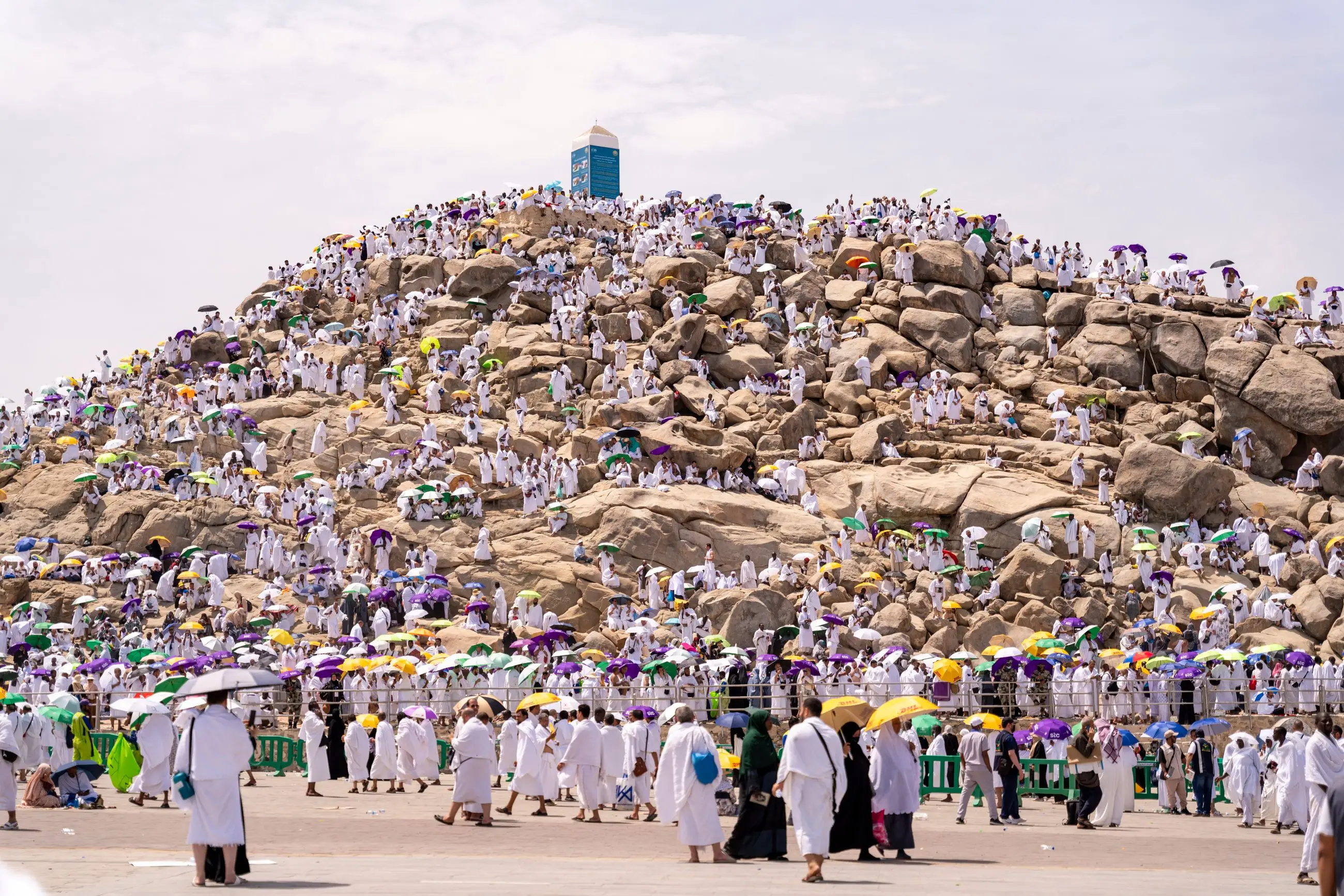
Heat exhaustion and dehydration — not crowds — are the leading cause of medical emergencies at Hajj.
- Drink on a schedule, not on thirst. By the time you feel thirsty you are already behind.
- Use electrolytes on long days. Water alone is not enough when you are losing salt for fourteen hours.
- Carry a light-colored umbrella. Men in Ihram cannot cover the head directly, and an umbrella is permitted.
- Sunscreen matters, especially after Halq (shaving the head). While you are in Ihram it must be unscented.
- Move in cooler hours where the schedule allows it.
- Rest in shade without guilt. Resting is not a break from the worship; it is what lets you continue it.
- Eat before you are starving.
Warning signs, and the line where it becomes an emergency
Act now: heavy sweating with weakness or dizziness · headache, nausea, cramps · unusual fatigue, irritability or mild confusion.
What to do: stop, get into shade, sip water, cool the skin, and tell someone in your group.
Watch out for each other
The person who stops complaining about the heat and goes quiet is the one to check on. People pushing through in silence is how most serious cases start, and noticing is something anyone can do.
Your body is carrying you through the worship. Looking after it is not a distraction from Hajj.