



PrepareSheet 9 of 10In draft
You do not need a script for every second of Hajj.
The authentic adhkar of the rites — and a builder that helps you write your Arafah list months before you need it.
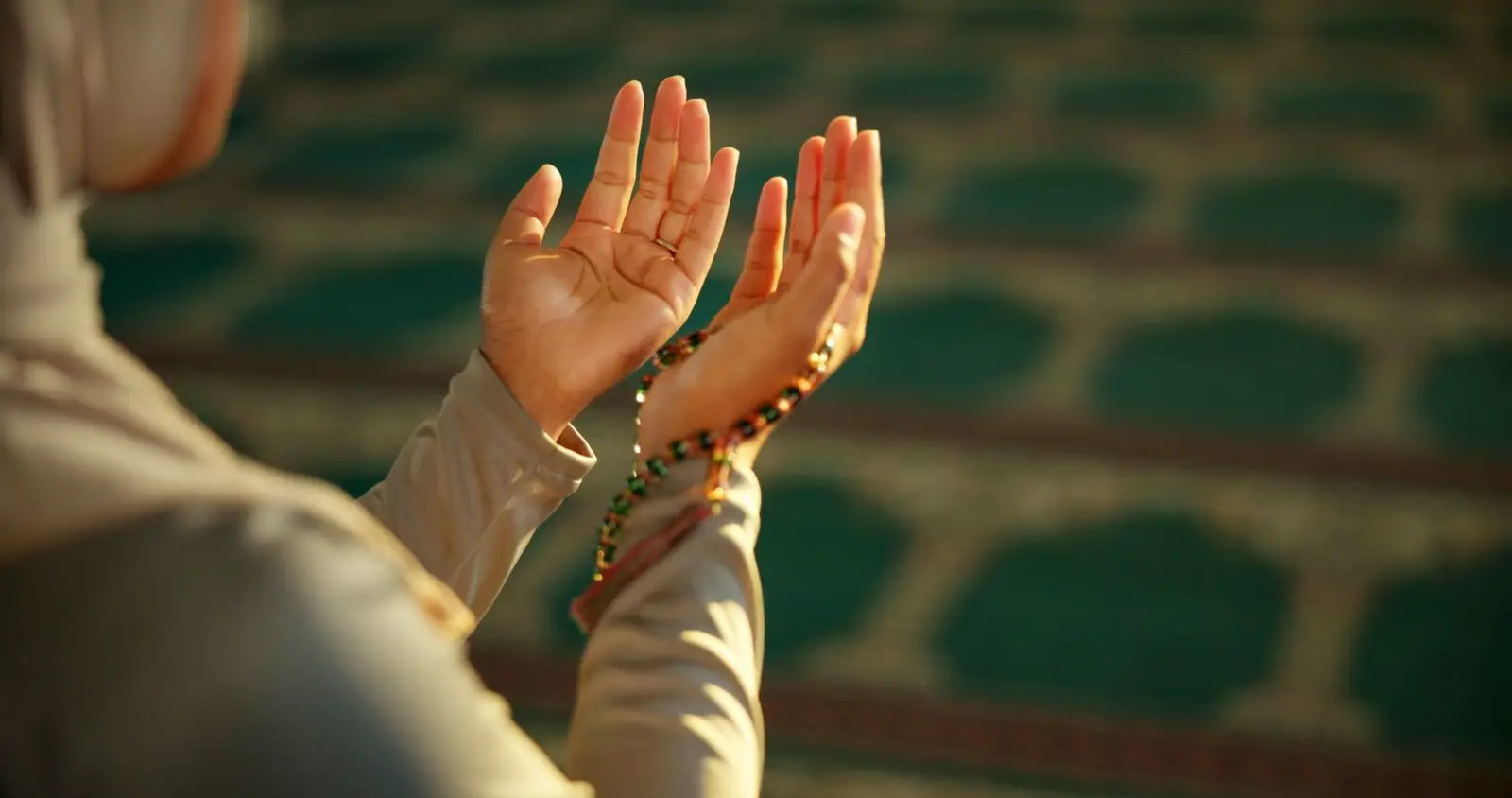
There is no requirement to memorise a different scripted du’a for every circuit of Tawaf. Learn the authentic adhkar of the rites with your teacher, then speak to Allah in whatever language your heart actually thinks in.
The Talbiyah
لَبَّيْكَ اللَّهُمَّ لَبَّيْكَ
لَبَّيْكَ لَا شَرِيكَ لَكَ لَبَّيْكَ
إِنَّ الْحَمْدَ وَالنِّعْمَةَ لَكَ وَالْمُلْكَ
لَا شَرِيكَ لَكَ
Labbayka Allahumma Labbayk. Labbayka la sharika laka Labbayk.
Innal-hamda wan-ni’mata laka wal-mulk. La sharika lak.
Here I am, O Allah, here I am. Here I am — You have no partner — here I am. Surely all praise, blessings and sovereignty belong to You. You have no partner.
Learn it by heart before you fly. You are about to say it a great deal.
Two you will return to constantly
Rabbana atina fid-dunya hasanatan wa fil-akhirati hasanatan wa qina ’adhaban-nar.
Our Lord, give us good in this world and good in the Hereafter, and protect us from the punishment of the Fire.
Rabbana zalamna anfusana wa illam taghfir lana wa tarhamna lanakunanna minal-khasireen.
Our Lord, we have wronged ourselves. If You do not forgive us and have mercy upon us, we will surely be among the losers.
The adhkar of the rites, in order
What follows is the short list of remembrances tied to specific moments of the rites, with where each is reported. It is deliberately not long: most moments of Hajj carry no fixed script at all, and that absence is a permission, not a gap — your own words, in your own language, are the intended filling. Confirm the practice of each with your teacher.
At the Black Stone line, each circuit — face or gesture toward the Stone and say Allahu akbar, as the Prophet ﷺ did when passing it (reported in al-Bukhari). No circuit has a scripted du’a of its own.
Between the Yamani corner and the Black Stone — the place reported for Rabbana atina fid-dunya hasanah… (reported in Abu Dawud), written out above. The rest of each circuit is yours.
On Safa, and again on Marwah — from the hadith of Jabir in Sahih Muslim: face the qiblah and say, three times, with du’a of your own between:
لا إله إلا الله وحده لا شريك له، له الملك وله الحمد وهو على كل شيء قدير، لا إله إلا الله وحده، أنجز وعده، ونصر عبده، وهزم الأحزاب وحده
La ilaha illallahu wahdahu la sharika lah, lahul-mulku wa lahul-hamdu wa huwa ’ala kulli shay’in qadir. La ilaha illallahu wahdah, anjaza wa’dah, wa nasara ’abdah, wa hazamal-ahzaba wahdah.
There is no god but Allah alone, without partner. His is the dominion and His is the praise, and He has power over all things. There is no god but Allah alone: He fulfilled His promise, gave victory to His servant, and defeated the confederates alone.
The day of Arafah — the Prophet ﷺ said: the best du’a is the du’a of the day of Arafah, and the best of what I and the prophets before me have said is (reported in at-Tirmidhi):
لا إله إلا الله وحده لا شريك له، له الملك وله الحمد وهو على كل شيء قدير
La ilaha illallahu wahdahu la sharika lah, lahul-mulku wa lahul-hamdu wa huwa ’ala kulli shay’in qadir.
There is no god but Allah alone, without partner. His is the dominion and His is the praise, and He has power over all things.
Anchor the afternoon in this, and spend the hours on your list. The standing has no other script — that is the point of it.
At al-Mash’ar al-Haram, after Fajr at Muzdalifah — the Qur’an itself sets this moment: “remember Allah at the Mash’ar al-Haram” (2:198). Takbir, tahlil, and du’a facing the qiblah until the sky brightens, per the hadith of Jabir. No fixed wording is prescribed.
At the Jamarat — Allahu akbar with each pebble, all seven, every pillar. On the days of Tashriq, after the first and the middle Jamrah, the Sunnah is to step aside, face the qiblah, and make long du’a of your own (reported in al-Bukhari); after the last, none is reported — you move on.
Zamzam — drink and ask for what you need. The widely cited report that Zamzam is for whatever it is drunk for is variously graded by the scholars; what is beyond doubt is that no du’a is prescribed and none is excluded, which makes it another door left deliberately open.
Prepare for Arafah before you leave home
1
Day
The one to prepare for above all others
If there is a single day to prepare for before leaving home, it is this one.
Here is what happens to people who do not: they arrive at Arafah, stand in the most concentrated hours of du’a of their lives, and find their mind blank. Not because they do not want anything — because wanting things and being able to articulate them under that weight are different skills.
The people who arrive with a written list do not have that problem. They open a piece of paper and work through it, and by the time they reach the end the words are coming on their own.
What to write down
Give yourself months, not a morning. Come back to it. Add to it when something occurs to you.
- You. What do you want Allah to change in you? What are you afraid of in yourself? What do you want to be true about you one year from now?
- Your parents. What do you want given to them? What do you fear for them? What do you wish you could give them yourself?
- Your spouse, or your marriage. What do you want it to become? What needs healing? If you are hoping to marry — what are you asking for?
- Your children, including those you hope to have. Their deen, their character, their futures. And what you fear for them.
- Your deen. Where do you want consistency — salah, Qur’an, knowledge? What sin are you asking to be freed from for good?
- Health. Your body, your mind, and those you love who are ill. Name them.
- Rizq and work. What provision, what barakah in what you already have, and what decision needs guidance.
- Forgiveness. What do you most need forgiven? Who do you need to forgive, and whose forgiveness do you need?
- Your akhirah. Jannah. Protection from the Fire. A good ending. The company of the Prophet ﷺ. In your own words.
- Your community. Your masjid, your teachers, your friends, your neighbours.
- The ummah. The suffering, the oppressed, the displaced, those struggling privately — and those who have nobody remembering them by name.
- People who asked you. Write their names down now. You will not remember everyone on Arafah, and you will mind.
One suggestion
Once it is printed, put it in your Mashair bag, and leave space at the bottom.
Arafah has a way of reminding you of things no builder can.